What is Ubuntu Mediation?
Meditation — Medication — Mediation?
Simply put, mediation is guided conflict resolution—an alternative approach to collaborative problem-solving.
The goals and outcomes remain entirely in the hands of the participants. My role as the mediator is simply to structure and guide the process.
Unlike lengthy court proceedings, mediation usually brings parties together in the same room for just a few sessions. The techniques used make it possible to re-establish a respectful atmosphere even in deadlocked situations, uncover the root cause of the dispute, and draw out the underlying interests and needs.
Seeing, hearing, and understanding these mutual needs is often the key to finding a lasting resolution that satisfies everyone—though reaching a mutual agreement does not always have to be the sole objective.
“In this process, everything is welcome, but nothing is mandatory! Plus, none of it involves complex legal language or roundabout communication via lawyers.”
So, where does the "Ubuntu" philosophy fit into mediation?
The word ‘Ubuntu’ originates from the Bantu languages.
“Umuntu ngumuntu ngabantu” — “A person is a person through other people.”
Adapted in various ways across different languages, this ancient "we-philosophy" from Southern Africa essentially signifies "humanity," "fellow feeling," and a "sense of community," alongside the awareness and experience of being part of a larger whole.
Ubuntu can be understood as "becoming human together—rendering one another human."
To see, but also to be seen. Not in a vain sense, but in a way that truly connects us human-to-human. It prompts an introspection: What do I require, and what can I give?
In my understanding, this inner and outer perspective transforms mediation into a kind of healing medicine—an opportunity to reflect inward and reconnect.
Mediation: Principles, Phases & Opportunities
The 5 Core Principles
Voluntariness
Participation in mediation is completely voluntary for everyone involved. No one can be forced to participate or accept a specific outcome. Any party can end the process at any time.
Neutrality & Multi-Partisanship
As your mediator, I remain neutral and do not side with anyone. I help all participants represent their interests fairly, while actively avoiding personal opinions or judgment.
Confidentiality
Everything discussed in mediation remains strictly confidential. I do not share any information with third parties, creating a safe space for open conversation.
Self-Determination
The parties themselves are responsible for resolving their conflict. I do not impose solutions; instead, I facilitate collaborative problem-solving. All decisions are made independently by the participants.
Openness to Outcomes
The goal is a solution acceptable to everyone, but the result is never predetermined. There are no fixed rules—only space for creative solutions. The parties decide together what works best for them.
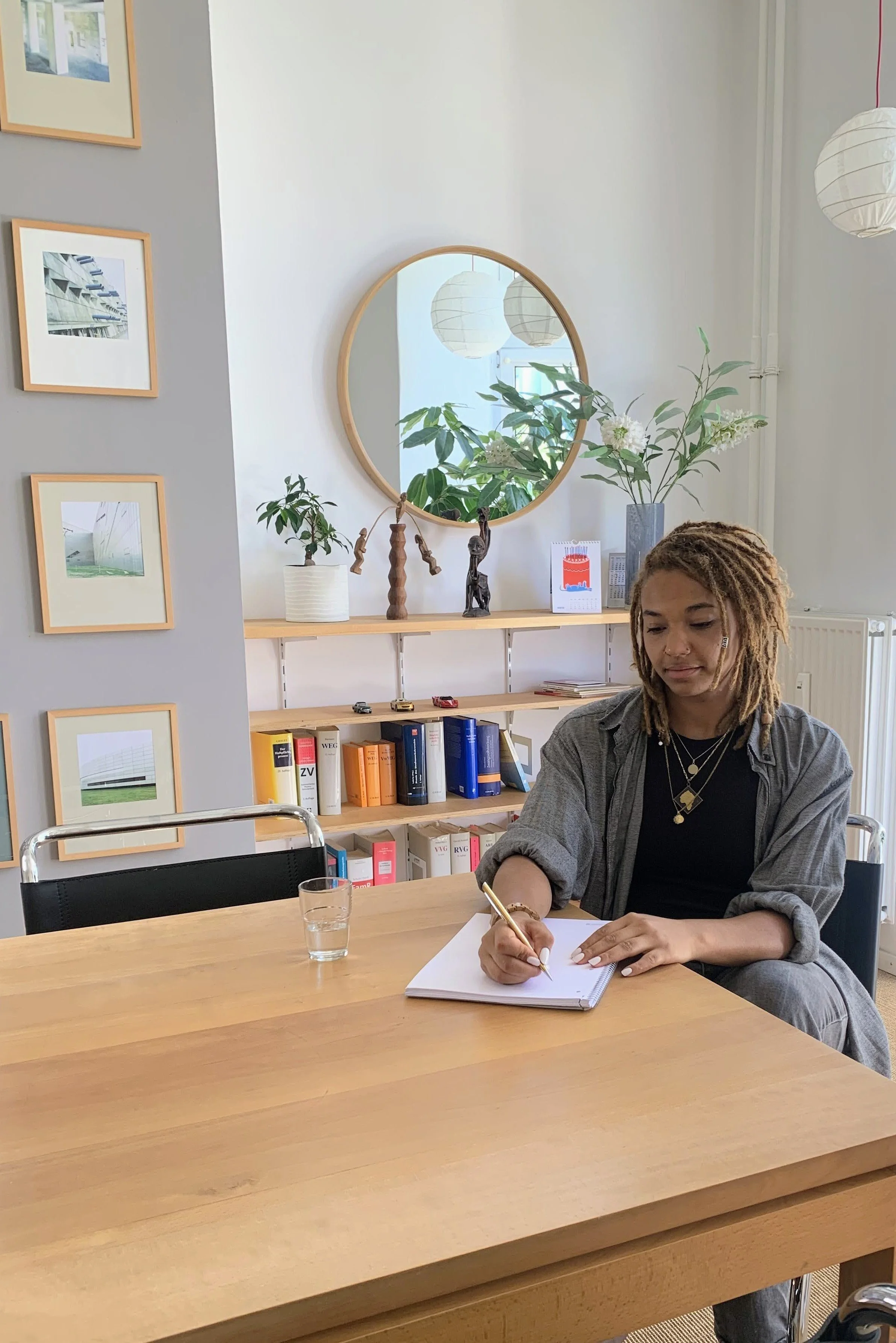
Through structured mediation techniques, I provide you with essential conflict competencies to help you collaborate constructively on practical solutions. Improving your communication in this way helps safeguard against future escalations.
Mediation: Principles, Phases & Opportunities
How Does Mediation Work?
Whether mediation takes place online or in person, my process is structured into 5 core phases, plus 2 optional steps.
Initial Contact (Phase 0)
Naturally, everything starts with an initial contact and a free preliminary consultation. This gives us a quick opportunity via phone to clarify logistics, determine whether the situation is suitable for mediation, and ensure that we are a good fit.
1.Opening & Framework
Each participant provides a brief summary of their viewpoint and outlines the topics in dispute. In my role as mediator, I outline the mediation process, review the underlying principles, manage expectations, and address any preliminary questions.
The goal is to create an open and respectful atmosphere for dialogue.
2. Setting the Agenda
The parties share their respective perspectives and lay out the core issues of the conflict. As the mediator, I structure these topics and ensure that all relevant points are captured. The goal is to establish a shared understanding of the key issues in dispute.
The goal is to establish a shared understanding of the key issues in dispute.
Phase 3: Uncovering Underlying Interests
Participants elaborate on their underlying needs, interests, and context surrounding each topic. My role as mediator is to make concealed motivations and emotional factors visible and understandable.
The goal is to foster empathy and enable a solution-oriented perspective.
Phase 4: Developing Options & Solutions
The parties collaborate to generate creative options. In my role as mediator, I facilitate brainstorming methods and ensure equitable negotiations. The most promising proposals are evaluated and further developed by the participants until a mutually satisfactory resolution is achieved.
The goal is to develop concrete options for a solution while remaining completely open-minded and exploring all possibilities.
Phase 5: Agreement & Action Plan
This stage defines the scope and framework of the final agreement, rendering the results into binding terms. If required, concrete action steps for implementation as well as review mechanisms are agreed upon.
The goal is to find a solution that is acceptable to all parties involved, regardless of whether it aligns with the subjective moral definitions of "justice." Even agreeing on a structured plan toward a resolution can represent a successful outcome.
Phase 6: Follow-Up
For individual sessions, I am happy to offer a follow-up conversation to reinforce and ensure the long-term sustainability of the mediation outcomes.
Ubuntu mediation — "Let’s talk to each other again..."
Copyright © 2026 Ubuntu — Mediation | Powered Squarespace